
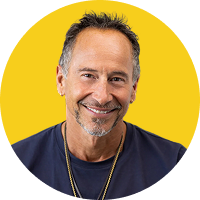


Renowned for his ability to craft engaging narratives and bring out the best in his actors, Michael Spiller is a sought-after director in the entertainment industry. Join Jeffrey Saad as he sits down with Michael for a candid conversation about his illustrious career in film and television. Michael emphasizes the importance of creativity and collaboration, sharing his approach to managing the circle of control to foster a supportive atmosphere on set. He offers candid insights into freelancing challenges, industry changes, and the importance of fostering a space for idea sharing. Join Jeffrey and Michael for an inspiring conversation about passion, resilience, and the magic of storytelling.
—
Watch the episode here
Listen to the podcast here
Michael Spiller, How An Emmy-Winning Director Manages The Circle
Michael’s Journey
This is one of those episodes I’m looking forward to because I know you as Michael Spiller, one of the greatest humans on Earth. The rest of the world knows you as this unbelievable director. From your classmate Hal Hartley with The Unbelievable Truth, you were destined to succeed because that was an award-winning film. You were still in school. He was a classmate or something.
I love the stories about all these documentaries like Ask Dr. Ruth and these indie films. You could talk more about your hesitation to push from cinematography to directing. Anybody that doesn’t know you, the list goes on and on. You did Sex and the City and Scrubs. We all cheered when you got the Emmy for Modern Family’s Halloween episode in 2011. It was like, “I won.” I didn’t win, but I feel like I won because it was my friend Michael. It was so cool. You did Firefly Lane, the Mighty Ducks, and Ugly Betty in the past. It’s unbelievable to me.
People who say, “I want to get into Hollywood,” if they did 10% of what you did, they’d probably be considered a roaring success. What I love about having you on this show is talking about The Circle. I want to talk about how you bring The Circle into your business and your personal life and how that affects you. This whole show is about the idea that if we want to grow our inner circle, then that’s where we have to put our energy. The more we focus on outside the circle of things we can’t control, the harder it is to do that.
That’s enough about me talking about how much I love you. Let’s talk about you and what you think of you. We’ve been friends for 23 years, but there’s always something new to learn, which I love. The people who are tuning in are probably like, “I’ve watched that guy’s stuff. I love those shows. I didn’t know that was him,” or “I do know that was him. I love him.” Talk more about your career, about you, what you’ve done, your family, and how that has all come together.
There’s a lot there, but I’ll start career-wise. I began making my own movies when I was twelve. I bought a little Super 8 camera from the money I saved from my paper route growing up in Brooklyn and started making movies. I always loved movies. I didn’t think it was something you could do as a job. I was like, “They’re movies. I don’t know where they come from.”

You were making those on some little handheld original Super 8 film camera.
It was awesome. I cut them by hand with a razor blade, taped them together, and all that stuff. I lost interest a little bit. I discovered beer, girls, and stuff like that. I then wound up going to SUNY Purchase which had a film program. I was a liberal arts student. I said, “Let me take a couple of classes and see.” I loved them. I transferred to the film department and mainly was a cinematographer there. I was filming other people’s work. I thought, “I’ll graduate. I’ll be able to work on various projects for a few years, but then I’ll probably have to get a job.” I’ve never done anything else.
I’ve worked in many different capacities. I was working my way up through the crew, which served me not only in terms of experience and getting to watch other people work but building respect and understanding of each onset position. By the time I became a cinematographer, I had such a deep respect for the team. Also, people couldn’t play games with me. If I was like, “I need a light over there,” and they’d be like, “That’s going to take three hours,” I’d be like, “That’s going to take 45.”
That’s my story. I was always like, “I got to be a chef first in the middle of a restaurant.” It’s the same thing. I got to be able to go in the kitchen and go, “Here’s what’s up.”
You love that these are your people and almost sideshow modern-day Carney that makes up your average film crew.
That’s such a great way to say it.
It could be a $10,000 independent short or a $100 million movie. These are people who love what they do and probably couldn’t exist behind a job behind a desk or where there’s predictability. There’s an energy. Being surrounded by people who want to be there is such an amazing creative space.
I have no idea that you create a lot of that energy. You’re in the very small percentile of people who have done one thing their whole life and still love it, or at least that’s my impression of you. The challenges, we can talk about some of those, but the reality is that’s pretty amazing. How do you think you’ve stayed that in love or that engaged?
I’ve been doing it professionally for 40 years. I think back on some of the crazy experiences, the adventure, travel, people I’ve met, and things I’ve done. It is fascinating. I feel incredibly fortunate. The way I keep showing up for it, the simple fact is that I love this work so much. I would do it for free because I love it. It’s where I feel most at home in my element. I’m naturally a shy person. I’m directing, so I’m leading a team of 120 to 150 people.
Half of them that you met that day probably or whatever is going on.
It could be. That’s often the case when you’re a guest director on a show. You’re responsible for millions of dollars of other people’s money. The people who hire me have to be happy with the work. The best job is that I can be my authentic self and be silly, fun, and collaborative. That’s the stuff that I am chasing these days because I don’t want to keep doing an episode of this and an episode of that.
I enjoy having a home where I’m producing director and I’m responsible for helping to create the culture on the set and bring in people who share my mindset or are open to my mindset of having it be a completely safe space in every aspect of the word. That could be physically and from a safe space in terms of individual expression and stuff like that. There’s no harassment or anything.
I remember decades ago you were the biggest cheerleader for anybody and everybody that you wanted to bring up and see thrive. It’s amazing.
Thank you. I’m very proud of that and still believe in that very strongly. To close the loop on what I was saying, it’s also safe creatively. If you are coming onto the show and you are a guest director, if you are censoring your ideas or keeping them to yourself, then I’m not getting the best out of you. It’s the same with everyone on the team. They know that they have permission if they’ve got a good idea, even if it’s outside of their job description. Film crews are compartmentalized. It’s like, “You’re responsible for this narrow sliver and you’re going to do a great job at it.” Sometimes, you have an idea for the wardrobe department.
If you keep your ideas to yourself, then I’m not getting the best out of you. Share on XThe crew is giving you thoughts and you’re open to it.
The boom person could be pitching a joke. I want to hear it because if you can keep it to yourself, it’s lost forever. It could even turn into resentment. People are like, “They should have figured this out.”
It sounds like no surprise because that’s why we love each other. We are alike in a lot of ways. As I progress in my real estate career and in everything I do more and more, it’s like a reduction. I don’t want to do more. How much more can I do? I want to be great at each thing I do. I want to be better for each client. It sounds like there’s some of the same in there. You’re digging into how you create amazing stuff, not just more stuff.
That’s part of it. There are certain people that life’s too short and I don’t want to work with them. I wish them the best and I hope they evolve, but I don’t want to work with them. I’ll quote my friend, Bill Lawrence, who created Scrubs and Ted Lasso. He’s like, “There’s a No Asshole Policy.” Life is too short. Work with people who want to be there, who are fun, and who are going to elevate the project.
Life's too short. Work with people who want to be there. Share on XHow have you evolved to be able to do that? I feel like anybody who makes it 40 years in the same career, especially Hollywood with all the changes and the challenges, you evolve personally and professionally. How do those two tie together?
One of the biggest challenges regarding this type of work is that I’m freelance. I’ve taught a bunch of times. When I’m speaking to film students, I always bring this up. No one talks to you about that aspect. There’s not going to be a guaranteed paycheck or a steady stream of income. In the early days of my career before I was married, had a big mortgage, or had kids, it was easier to be nimble. It’s like, “I’ll tighten the belt a little bit this month.” Also, we’d be like, “We booked a flight, but I got a job. We’ll cancel the trip.” It gets a little harder to do that as the responsibilities grow. There have been lean times for me and the business as a whole.
That’s so transparent of you to say. There’s this guy who’s wildly successful, killed it, is in a great place, and always will be. There’s this thing you used to tell me. I love it. For those people who don’t know, I was so intrigued as a young, new friend learning about the business. There’s, “Who’s Michael Spiller?”
It’s the fourth stage of your career in Hollywood.
Say it. I’ve always loved that.
It’s, “Who’s Mike Spiller? Get me Mike Spiller. Get me someone like Mike Spiller. Who’s Mike Spiller?”
Fortunately, you’re not at the fourth stage yet. Yet, you could still have moments of dry spells or whatever you want to call it, which is amazing.
That’s the first place where the circle of control comes in. Unless you’re generating your own work, there are people who do it. There are people who do what I do and do that. They develop projects and hunt stuff down. I’ve never been great at that. I’ve enjoyed the few times that I’ve done it. I’m good at it, but for whatever reason, that’s not part of my personality. Maybe I have a long “Honey Do” list so when I’m not working, I have other things to do. I can’t control whether work is coming my way. It may be because I did The Mindy Project for six seasons and another show with Mindy so I was out of the market for seven years.
That’s an amazing thing.
When I came off of that, the whole #MeToo and big Hollywood push to finally address the historical inequities and the hiring practices came along. If you were a straight White guy of a certain age, it was hard to find any work. That was hard to deal with for me emotionally because I felt like, “I’m one of the good guys.”
I know. That’s why we always jokingly said, “You put yourself out of work. Congrats.”
By being such a great mentor to so many. That was something that I could not control. You have your rainy day fund, and then eventually, it’s still raining and that fund is gone. What do you do? Facing those things when you have been doing it for so long doesn’t feel good. I struggled with that for a bit. We had the pandemic and then the strike, and then there’s the post-strike slowdown.
The industry is suffering. My heart breaks daily for so many talented people from executives to craft service people and everyone in between. The crews, the directors, the hair and makeup people, and all the support industries, these people are suffering. What work there is is largely going out of town. Not everybody is able to take those jobs. They’re not bringing the best boy electrician most times. They’ll bring the DP, the director, and some casts, and then they’ll get crew locally.
Getting Into The Business
What is your advice to all the people who want to get into the biz and everything else in reference to the circle of control? How do you manage that? What is worth spending your energy on inside the circle?
The advice I give people is to know that going into it, to plan accordingly, and to set money aside not just in a retirement fund. Whatever your monthly nut is, be able to live for 6 or 9 months without additional income. I’m extremely fortunate because I have residuals. If we moved out of LA and I decided I wasn’t going to work anymore, we’d probably be fine, and that’s amazing.
I am so happy to be a part of this guild and help represent other people through negotiations, but if you’re just starting out, that’s not going to be your story. Know it going into it. If you’re trying to control money and you want stability, it could be feast or famine. It’s very difficult. There’s only so much I can control. Generally, it’s a cashflow issue. It’s like, “Do I have to move something from one place and put it in another? What can I do?” I can take action steps so then I’m less likely to perseverate about all those things that I can’t control.
That’s the message I’m trying to get to people. People are good. People want to thrive. They want a happy, safe family. They want to do what they love doing and be okay, but I feel like so many people put so much weight on themselves. I love that you said, “The actions I can take,” because at the end of the day, that’s what the circle of control is about. If something is on your mind or something is bothering you, it’s like, “How can I affect this?” That’s the thing to do.
Sometimes, it’s drawing up a budget or looking at when those auto pay bills are coming in. It’s things like that so that you have more of a handle on it. Make those phone calls. If you’re trying to drum up work, it’s hard to pick up the phone, call people, and be like, “Do you remember me? We worked three years ago on that thing,” but you have to do it. No one is going to judge you. If you work in my industry, you’ve cold-called people.
You know me. For the first ten years of my career, I was like, “I’m Jeffrey. I want to sell your house,” and then they slam the phone.
That’s why you’re where you are.
When they finally said, “Jeffrey, get out of my doorstep,” I was like, “They know my name.” You give so much. I’ll never forget. You were probably at the peak of, “Get me someone Michael Spiller,” when I was going to go on The Food Network. It was like you were retired because you dropped everything, came over with your camera, all your skills, and all your knowledge, and helped me produce my demo reel. I’ll never forget that.
I tell people this and I mean this. There are only a couple of people in anybody’s world that would go, “Here are my keys. Here are my bank accounts. Here’s my family. I’ll be back in a year,” and when I got back, it would all be the same or better. That’s who you are. My question for you might be a little less fun to talk about. How much of all that do you think is coming at the expense of Michael being taken care of?
There’s a fair amount of that. First of all, thank you for saying all those things. I love being of service to people I know and love like you and people that I’ve met. I try to be respectful and kind and spread joy and love. Sometimes, it does come at the expense of myself. I’m still evolving. I’m still learning. I’m curious about stuff. I try to have a beginner’s mindset about things and be open and flexible. I try not to have a rigid mindset.
In the twenty-some years that I’ve known you, and we all need to learn this from you, I don’t think I’ve ever heard you had an aggressively strong opinion about anything. You’re smart, articulate, and thoughtful, but you’re always like, “There’s another side to it.” I’ve never seen you be like, “There’s no other way. This is how it is, should be, or what I expect.”
I find that interesting because there are certain things I feel so strongly about. I’m also trying to find my voice too because that’s part of my own journey. Maybe some of that’s passive and not good. This applies to the snapshot in the professional space. When I’m hired, I’m hired not just for my hair, my skill, and my personality, but it is because my experience should empower a perspective, a voice, an opinion, and stuff like that. For many years, meeting with 5 or 6 of my peers, the highest levels on the show, I’d be like, “What are they thinking?” I’d sign off on that. I didn’t necessarily trust my own reaction.
It’s ironic that you’re open to everybody’s input but you don’t give yours all the time.
That’s the thing. A lot of it is rooted in deeper psychological stuff based on my childhood and feeling like I wasn’t good enough, and people would reject me. We can go into some, for sure. When I moved to Brooklyn at age five, for many years, I was targeted, beaten up, and picked on. I had a lot of stuff going on. I got a negative message.
I was an only child. Both my parents worked. I didn’t turn to them and go, “I’m being targeted. I need help. What do I do?” I had already somehow gotten a message that I was going to have to take care of myself and figure stuff out. When I was around twelve, I got tired of it and created a fictional version of myself so that I would be accepted.
That’s so heavy. How did you do that?
On the one hand, it was a survival skill, but on the other hand, it was like, “I’m still here.” I started running errands for Joey Dead Eye, The Social Club across the street, Jimmy Flea, and Scarface Nino. These are real people. That was my world. At a certain point, I had to make a choice because the little errands got bigger.
It became more dangerous.
They were like, “What’s in this package? I don’t have to bring the package. You’re going to bring it over there. That’s it. Go give me a Manhattan special.” It wasn’t me. It wasn’t who I was. That led me to an internal conflict that wound up expressing itself through alcohol, drugs, violence, vandalism, and self-hatred. It was mainly self-hatred. I’m still unpacking this today. A lot of artists and creative people have a negative voice in their head, unfortunately, telling them they’re an imposter, they’re a fraud, or they suck, or, “It’s never going to be good enough. You don’t deserve that award. We’re going to take it back.” It tells them all that negative stuff.
Fast forward back to that moment sitting around the table with 5 or 6 executives or my creative peers, I was not trusting my instinct, my gut, and my actual reaction. I was like, “What if I say it and it’s unpopular and they’re going to reject me?” For years, that held me back. I still managed to do okay, but I wasn’t bringing all of me to the table.
Evolving One’s Storytelling Ability
I hope people are taking notes of this because this is huge. This is coming from somebody who is a wild success, an amazing dad, an amazing husband, and all that too. I find it so powerful because what is it in us that makes us choose this story? This is an Eckhart Tolle thing, which I love. Everything is a story. Everything, except this very second is all a story. Somehow, I’ve worked and trained to only choose good ones. Even if it ends up being bad, at least the journey was good because I thought it was good right until it wasn’t. How have you evolved in that, or have you, honestly, in your ability to tell better stories if you’re going to tell them at all?
The question is about the stories I tell myself.
A lot of times, it’s other people because we share them and reinforce them.
I’m also a storyteller by profession. There’s a dovetail and an overlap there. When I’m able to show up authentically, truly bring everything that I can to a project, be honest with myself, and be present with myself, I will be doing both parties a service. I’ll be serving myself and have no regrets about whatever I bring. Whoever has hired me will get the best out of me. It is a journey. I did this intensive workshop for a week. It was all about childhood trauma and how that shows up, co-dependence, and unhealthy coping techniques and ways to combat that. It was individual therapy, group therapy, experiential stuff, EMDR, ETT, and all this stuff to rewire the neural pathways.
When I’m able to show up authentically, I’ll be serving myself and have no regrets about whatever I bring, and whoever hires me will get the best out of me. Share on XThat’s what it is. If you keep telling those negative stories, you’re firing those synapses neocortex, or whatever they are and you’re digging in. The longer you tell that story, the more it’s like, “Is it real or is it a story?”
It’s like when you’re going to turn in your iPhone, get the newer model, and you wipe it. You can do the thing where you override it 7 or 8 times and take it out. That’s what I’m doing.
That’s a great analogy.
There had been 60 years of this negative message imprinted. Often, it’s my voice. It’s not like it’s a teacher or it’s my mom.
There’s nobody else beating you up anymore. There’s nobody else calling you names anymore. In theory, that story is 55 years old or whatever it is.
It’s my voice, and I have to rewrite that.
Have you gotten better at it?
Yes.
Talk about how because that’s the most valuable thing there is. I know, as someone that I love, that that’s something you’ve always struggled with. If you saw yourself through the eyes of the rest of us, you wouldn’t have any of those stories.
I’ll tell you this one thing, and I may have told you this already. In early July 2024, I taught for three days up in Vancouver. It was amazing. It felt like a transformation.
Anybody who wants to get into the biz needs to watch that. I watched it. It’s on YouTube. It’s by the Vancouver Film School or VFS. The nuggets you get out of there, grab your baskets, and keep catching them. Go ahead. I wanted to plug that in because people should watch it.
Thank you. The first step of this was a three-hour ask-me-anything thing with the people who were participating in this workshop. It was great. I was very intentional. I said, “I’m going to show up. I’m going to be as honest as I can be with words and all.” It’s the stuff that we’re talking about here too. It’s not, “Here’s this guy that’s successful. What am I going to get?” If I try to pose for them and put on a facade or have a mask on, it does nobody any good.
After it all ended, I spoke with a few students individually, and then I started walking back to the hotel. This young woman stopped me. She was maybe 20 years old and 5 feet tall. She was tiny. She said, “Spiller.” Everybody calls me Spiller. I turned around and she said, “I want you to know that you’ve made a difference in everything you do.” She was saying all these complimentary things. I am being very gracious and I accept them, but it’s almost like I’m made of Teflon and the compliments are sliding off me.
You keep the bad stuff. You’re like, “I’m not worthy of good things.”
That’s Velcro. I’m being polite. I am moved. She saw me in that moment in a way that very few people had and she said, “You have to hear this. You have to see yourself. You have made a difference. The shows you have worked on have changed people’s lives. The things you’ve been involved in have saved people’s lives. You need to own that.” At this point, I’m in tears.
She saw you. She’s like, “This Emmy award-winning badass needs to understand he’s good and he’s worth it.”
She would not let me off the hook. I said, “Thank you so much. I am going to carry this with me because I’m going to need to hear that again.” She turns and leaves. That felt like the beginning of this journey that I then took. The same thread that pulled through that brought me to this trauma workshop. One morning, I woke up and I was thinking about that encounter with her. I was like, “Was she even real? Was she a messenger or something?” It truly was.
That’s part of my thing. The things that will piss me off or push historic buttons from my past are feeling unseen and feeling unheard. My amazing wife, Melanie, has ADD. She interjects. She says it. There are times I love it and I go, “That’s Melanie.” There are times when I’m in the middle of a story or I’ve been patiently waiting for a thing that work can get under my skin. It’s all me that’s a problem in that instance. It’s this old childhood wound and sense of feeling unseen, unheard, unimportant, and unloved. The small thing is I’m trying to say something and then it goes straight to, “I’m unlovable because I’m a piece of crap.” That’s the core thing that it goes to.
Isn’t it ironic? I always think that the reason I love being in hospitality so much as a chef cooking for people and serving people is because I want to give what I never got. It seems like, and please correct me or expand on this, you view storytelling as a way to give what you weren’t getting. You make the world laugh. You have brought pieces of paper with typed words on it to life to give and to bring joy.
I’m always cautious about saying too much although I feel there’s little to be gained by not holding stuff back. My parents are both alive. I love them deeply.
Bill and Barbara. They’re rockstars.
They were very different people when they had me at 21 years old. They were starting their careers. We all made this big move to Brooklyn. We laughed. There was a lot of love. I was an only child. There was also neglect. There were both things. There were things that happened to me that they were not a part of that I didn’t share with them so they couldn’t know. Being a parent too, it’s very easy to look at those things and then transplant my experience as a parent and go, “I didn’t know all the mistakes she made.” Everybody, I believe, does the best they can.
There are no instructions, as we all joke about. There’s no manual for this stuff.
It turns out there are some good manuals out there.
Now, there is, but we didn’t have them.
It was a lot harder. There are lots of guides out there. I truly believe teachers are everywhere.
I’ve always said that. Everybody’s a mentor even if it’s something you shouldn’t do.
If your eyes, ears, heart, and mind are open, you’ll take the good stuff. I’ve gotten so much from you over the years. You are one of the best listeners I’ve ever known. We’ll be talking for twenty minutes sometimes and he’s asking, “How are the kids?” It’s the way you’re so kind to every person you meet and so respectful, whether you’re eating tacos out of a hubcap in Mexico.

You’re the listener. You have a good memory. That was twenty-some years ago.
It could also be to the person filling your glass in a five-star restaurant where you’ll probably get food poisoning, as you say.
I’ve always said that all we have in this world is each other. I can give you all the money, all the cars, all the houses, and everything in the whole world. It’s yours. If you were the only person on Earth, you’d kill yourself. There is no value without this. More than ever with these political times and everything else, it has got to be not, “What do I think?” I already know what I think. It’s, “What do you think and why?” Let me find the nugget in there that I could connect with you and learn from. If I spew what I know, I already know it. It doesn’t help anybody.
You have done that around some things. Melanie grew up with a very different kind of family. Her family had a lot of money. My family had no money. Then, her family lost money. My family started, over the years, to have a little bit of money. I became successful. When it came to raising our kids, we had different approaches. I was very quick to say, “Your parents are nuts. We’re going to do it my way.”
Did she react well to that?
Yeah. I don’t know why. Eventually, I was like, “Come to think of it, there are certain things that didn’t work. They didn’t have any real boundaries. They never suffered consequences,” and that sort of thing.
Being hovered over and being ignored, they’re both the opposite ends of the spectrum that’s bad.
We evolved a bit. My way is not necessarily the right way. As I’ve grown both in terms of my relationship with my wife, my family, my friends, and then in the professional space too, it’s like, “Here’s how it should be done. I’m open to better ideas.” As a director and a producer, it’s expected that I was going with something, but it’s not etched in stone. I love getting in the rigging grips of the wheelhouse. It’s like, “How are you going to solve this? That stuff fascinates me.” Occasionally, I’ll throw them an idea.
My way is not necessarily the right way. Share on XHandling Worry And Focusing On The Controllable
That’s ironic. They’re probably wide open to it because you do that with them. I have a hard question for you. You know I’ve told you this. My whole goal of doing this show is I want to leave people better than we found them. For the people who tuned in today, if they don’t walk away with something that they can make actionable or that makes their lives better, then I failed. That’s what the point of this is.
I’ve always known you as somebody that does worry a lot and that does focus outside the circle. What’s fascinating to me, to wrap this challenge in a blanket of compliments because it’s true, is the amount of stuff you’ve accomplished as a family man and a professional. I always say it’s amazing. All of us, to a point, are pushing against the tide. Whatever we accomplish, it’s like in the face of the wind.
Think about where you would be if you didn’t carry all that other stuff as well. Somehow, that’s what made you who you are. We know that too. Talk about that. If I’m wrong, tell me I’m wrong, but you struggle with thinking about digging in and getting down these rabbit holes of things that you’re not going to be able to change.
No question. That has been a struggle my whole life. Part of it stems from growing up in, in many aspects, an unsafe environment and having to be on high alert. Even now when I’m walking down the street, I’d be assessing everybody for potential threats. I try not to. If I’m not fully present, I can revert to that because a threat can come from anywhere. That heightened hypervigilance is enormously energy-consuming and it’s a horrible way to move through life.
My anxiety, in general, increased once I became a parent because it’s not just me. My way through life is like, “If something happens to my kid.” I’ve never loved anything as much. It’s that increased stuff. I’ve gotten better at that. My son certainly did plenty of things. He got into his own trouble and had his own adventures. If I prevented that because I was too anxious, I would’ve stifled his growth. It’s a struggle.
Is there improvement?
There’s improvement too. It’s wasted energy because you could worry about something all you want and it will not affect the outcome. In my professional world, I need to think like an insurance adjuster or like, “What could go wrong?” and try to anticipate those things or at least bring them up and raise them. If that thing happened, it could be a detriment to the production and we want to be prepared.
It’s different because I’m not as invested personally if I was doing the same thing in my life, which I had done particularly twenty years ago or so. It keeps you up at night. It’s probably OCD on some level too of thinking about these intrusive thoughts at night. I’m trying to go to sleep and I should be relaxed, whether it’s about the next day’s shoot, something going on with my kids, something going on with my relationship, or something going on politically.
Some things are within my circle of control, like my family, certainly. I can speak with my wife, talk to my therapist, or talk to my friends, and get other points of view. Unless I am holding the key to some conflict across the other side of the planet and I’m keeping that key to myself, there’s not much I can do to instantly create world peace and harmony.
Unless I'm holding the key to some conflict across the other side of the planet and I'm keeping that key to myself, there's not much I can do to instantly create world peace and harmony. Share on XEven though you know that, you’ll still sometimes do it. How have you been able to rein it in? What is a nugget that somebody can walk away with that has helped you rein it in? Before you answer, I want to dig out one of those nuggets you laid out. You make an important clarifying point. My friend Adriano, who’s a wildly successful restaurateur in San Francisco, said something similar to you.
He said, “I make a list of everything that could go wrong before I open another restaurant or before I do a show, and then I go, ‘Okay.’ I can check these five off now that I’ve thought about them. These other two don’t have an answer but they’re worth the risks so I’m going to let them go,” and then you got to walk away. That’s the difference. What I think so many people do is they make that list, check off the first five, then the last three that they can’t solve, they’re like, “I still can’t solve it,” and then they expand on it. They’re like, “Not only can I solve it, but what if it goes this way?” All of a sudden, it’s solved.
I had this epiphany maybe twenty years ago. We already moved out here. I was starting to direct full-time and go from show to show. I was starting to do bigger shows and stuff like that. Occasionally, there would be a day when you get a call sheet that outlines all the work that’s coming up the next day. On the surface, it seems like it’s unmakeable.
I’d be lying in bed and be like, “It’s midnight. I have to get up at 5:00. How am I going to do this day? How am I going to complete all the work we have to do tomorrow? It’s impossible. It can’t be done. Now it’s 12:30. I’m only going to get four and a half hours of sleep.” The lack of sleep became a thing of like, “I’ve got this impossible day. Now I’m getting three hours of sleep if I’m lucky.” It was gnawing away at me.
You laid that out perfectly. I’m sure the audience is feeling it too. That’s exactly it.
I got to this place where it was like, “What’s overwhelming? It’s the whole day. The way I’m going to accomplish that whole day’s work is one shot at a time like every freaking thing I’ve done in the twenty years before that.” How do you eat an elephant? One bite at a time. It’s like the Twelve Steps. You do it one day at a time. If you are zooming out and looking at the whole picture, it seems impossible and overwhelming, but you can say, “I can do this.” I’d be like, “We can probably do that 1st shot in twenty minutes if we’re lucky,” and then we’ll move forward. If we don’t make the day, the sun’s still going to rise tomorrow.
If you don’t, it’s out of your control at that point. That’s well said.
Before, I was fixating on sleep and all that. Now, I still don’t sleep a ton, but when I go to bed, I’m out.
It sounds like the way you’ve helped yourself is by making the stuff that is in control, like these call sheets, making it bite-sized. How are you getting better at what’s going on in the Middle East or what’s going on with the election? What are your triggers, ways, techniques, or things you put in place to help you if there are any that people can learn from?
It’s about recognizing that it’s happening and not pain shopping or anxiety shopping. I call it being an injustice collector.
Pain shopping is even better. I love that.
If scrolling social media is making you feel less than the people you’re following or it’s making your blood boil about the state of politics, or it’s getting you into an agitated state and you can’t seem to stop doing it, which is how these apps are designed that they encourage you to stay there, put the thing down or unfollow.
I laugh at Nadia who you know and love so well. She’s like, “Can you believe this idiot?” I’m like, “You say that every time. Unfollow. Why are you even watching it?”
It pushes a button. It gives a neurological response or physical response. It’s something that we recognize and that our bodies crave. If it’s causing you harm, step away from it. I listen to a lot of podcasts. I tune in to your show.
Thank you.
Some of them are political. There are days where I’m like, “I’m going to listen to something funny,” or, “I’m going to listen to an interview.”
That’s a good one. Adapt to the moment. I always say there’s food for every mood. If someone’s like, “What’s your favorite food?” I’m like, “It depends on the mood, the weather, or the day.” That’s an important point. Even if you normally listen to X at night, if this was a rough day for you, go watch a good episode that you produced instead.
There you go. It’s about checking in with yourself and being in your body. If you’re suddenly like, “Why are my shoulders hurting?” It’s probably because you’re all tensed up or wherever you carry your emotions, your stress, your anger, or all that stuff. Be aware of it, try to recognize the triggers, and then take a contrary action. Go for a walk. Do something that requires your full attention. For me, it’s often woodworking. Maybe for you, it’s surfing or riding your motorcycle. If you’re in your head about something else, you’re probably going to crash or wipe out. You have to do something to quiet the agitation. Meditation is great.
I do want to make sure that I mention this one technique. People have known about it. It was used forever on Saturday Night Live with Al Franken doing a Stuart Smalley, the guy who’s talking into a mirror and making affirmations. This stuff works, whether it’s setting an intention for yourself or reminding yourself that you are beautiful, you are lovable, you are smart, you are funny, you’re a good person, you’re a good husband, you’re a good wife or all that stuff.
If you try it the first couple of times, you’re going to feel like a complete idiot. There’s something about looking at yourself in the mirror and saying the words out loud, not thinking about them. There’s a reflex within your body that’s activated by your voice coming out. It’s not the same as hearing it. It’s not the same as writing it. You speak it out loud and look yourself in the eyes. It’s so simple. It seems so goofy, but I feel it when I do it. I’ve been doing it every day since I did this workshop.
I am so proud of you. I’ve been doing that for twenty years and it has changed about 20%, but the 80% of the core is still there. I 100% agree with you. I always say, “Be careful what you say because you’ll hear it.” We are programmable. Every morning, the first thing I say to myself is, “I love my life. It’s going to be a great day.”

Sometimes, I’ll call myself out and be like, “I’m not loving my life at this minute.” Say it and have that intention. It sounds silly, but I hope the audience walks away with that, if nothing else, besides watching all your shows because it’s true. It is the greatest example of storytelling. Tell that to yourself every day. That’s the way to start the day.
I love it. That is storytelling.
I like your point too. I don’t do that enough. I like what you said. I read it every morning. “I love my life,” I’ll say out loud. That’s a good point. I’m going to even start doing that a little bit more, to say it out loud, because you’re right. You have to be more aware. I learned a new thing from Mo Gawdat. It’s a book called Unstressable. He and Alice, and forgive me for not remembering her last name, the co-author, said, “Think of your brain as not you but a separate entity and say, “Go get me a better thought.” I’ve been playing with that and it works. It’s weird.
He says, “Exhaust your brain. Say, “Go ahead. What are you thinking?” He will set a little time aside each day and say, “What are you thinking?” The brain is like, “You’re not good enough. This thing’s not going to work out.” He’s like, “Tell me more about that. Lean into it.” With all the therapy and things you’ve gone through, this stuff is probably not new to you, but I was like, “That’s brilliant.” He said, “It’s amazing. You’ll see that in a matter of minutes, your brain gets worn out. It stops. You can direct it like, “Give me a better thought,” and then you’ll give yourself a better thought.
It’s part of overriding the negativity. I always describe it as if I have a negative thought, that idea bounces around in my head and it starts getting distorted. Here’s an example. I call you and leave you a message and you don’t call back. I’d be like, “He’s mad at me.” I create a story. I’m a storyteller. I could create a story around that, and then I start rewinding the tape. I’d be like, “What did I do? We had dinner there a couple of weeks ago. Did I say thank you?” I’ll start creating something.
I’m so glad you’re honest about that.
We’ve had things like this in our life. If I keep it in my head, it’s distorted. I’ll tell Melanie and she’ll be like, “What are you talking about? It’s Tuesday. He’s got open houses today. It’s not about you.”
There’s a little bit of arrogance too. We always think it’s about us.
There’s that great saying. It is, “When I was twenty, I was worried about what everyone thought about me. When I was 40, I didn’t care what anyone thought about me. When I was 60. I realized nobody is thinking about me.” Everybody is the star of their own show. The things that we worry about like, “I had mustard on my shirt,” if they saw it, they’re already not thinking about it.
Everybody's the star of their own show. Share on XWhat I think about you is that you’re the most transparent friend I’ve ever had. You’re the most self-deprecating but in a funny way. It’s even ironic that you would have these things because you’re not, at least overtly, the person putting up a facade, trying to protect from, or anything else. It’s very interesting. I love that. One of the other quotes I heard that I loved was from Hannibal Lecter.
The actor?
Yeah. We all know who he is. He said the greatest thing. It was, “It’s none of my business what other people think about me.”
It was Anthony Hopkins.
Thank you. I’ve always said too, “I’d rather have you not like me for who I am than like me for somebody else.”
That was my struggle as a teenager. It was, “I’m no longer getting my ass kicked. I was being held up at knife and gunpoint at twelve years old, but the person who’s accepted and everybody thinks is super popular is not me.” I don’t recommend that to anyone.
Self-Direction
I want to wrap it up with anything else that we haven’t talked about. You and I could talk for hours. I love you with all my heart. There’s so much good stuff here. As you’ve directed so many other people to be amazing and bring their stories to life, what’s your advice for people directing themselves? What is one of your biggest breakthroughs? Is there anything you want to share that I haven’t asked?
You’re worth it. You’re worth doing the work. I have lots of trappings of success, awards, and stuff like that, but there’s room for growth, discovery, healing, and a greater depth to my life. I’m worth it. The people I love the most are worth it.
They deserve the best of you.
By doing the work on myself, I am bringing a fuller, more authentic, better version of myself to the people I love the most. This is what I’m doing. This is me.
“I’m worth it, and this is me.” I can’t think of a better way to end. I love you. Thank you so much. This was brilliant.
Important Links
- YouTube – VFS Storyteller’s Studio – Emmy Winner Michael Spiller (AMA Live)
- Unstressable