
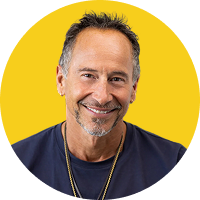


Joining Jeffrey Saad in delving into the philosophy of the circle of control is Paul Morris. He shares how this mindset allowed him to build a successful business empire and showcase his most authentic self. Paul looks back on his journey to become a New York Times best-selling author, podcaster, and real estate investor – all while staying sane and focused on his goals. He also talks about the myth of having one right time to invest, his approach to balancing money and happiness, and the power of self-forgiveness and equanimity. This is a thought-provoking episode about embracing and realizing your dreams that you do not want to miss.
—
Watch the episode here
Listen to the podcast here
What It Takes To Build A Business Empire With Paul Morris
Paul Morris, I’m so glad to have you here because we have a funny relationship. We bounce in and out of each other’s lives. What I love about you is that you always make me bounce a little higher. After I leave you, I’m always inspired. I’m always like, “There’s something more I should be thinking about. Something more I should be doing.” This show is called The Circle. I have this tattoo right here. My idea is that there’s a circle. I hate it when people say, “Change my life,” but it has. It is my operating system now. The idea is the circle of control. If you focus on the things you can control, your circle grows, your life flourishes. You don’t feel the weight of the world.
How The Circle Of Control Resonates With Paul
I’m not smart enough to figure this out. This was a Stoic philosophy that is 2,000 years old. When you focus outside the circle, it just weighs on you because you either can’t affect it or you’re not willing to, so why put your energy there? My first question to you is, because I respect you so much, you’ve built businesses. You’ve got 700 doors in real estate. Right out of the gate, you have Keller Williams offices, 7,000 agents or something. You have a New York Times bestselling book, Wealth Can’t Wait. I did read it when it came out, and again, I felt inspired. You’ve got your podcast, Forward One. I love it. We got the awesome Sarah here. We have an audience of one, but she is a powerful one.
She’s telling me to get my energy up, especially when you’re with Jeffrey. You’ve got to match that energy.
No, but you know what? That’s why you’re good for me, because I always say like, “Thank God everyone’s not me or I’d want to kill myself.” When I’m with you, I remind myself that power comes from just what you’re saying, not how loud, and it’s okay. What’s your financial podcast called?

You’re a great dad with a daughter, and you travel and you’re doing yoga poses that just seem like they break my neck. The question for you is, if this circle of control resonates with you, how does it apply to your ability to do all you’ve done? Does it resonate at all, or is it like, “I have nothing to do with that?”
It resonates completely. That circle is something to strive for. One of the things is if people could have all the energy that they wasted on battles that never happened, if we could have the energy back for all the battles that we’ve waged in our mind, and it never happened in real life, it would be a tremendous amount of battles. It’s the same thing. It’s the concept that I’ve had thousands of conversations and some of them have been with other people.
By nature, we live in our own heads. I feel inspired that you feel inspired by me, because that feeling’s absolutely mutual. I don’t know anybody who lives more in the present than you do and really working on those things that you can control. It doesn’t surprise me at all, the piece about the circle, and it is a practice. Also, I think part of that practice is a practice of forgiveness and forgiveness to yourself. If you want to be nice to anybody else, you’ve got to forgive yourself first.
Talk more about that. I love that.
Mean people are mean to themselves. I really believe that. If you can forgive yourself, meaning every day, I set out to do a bunch of things, and every day I fall short of what I set out to do. I go, “Yeah, okay.” Sometimes, I’ll procrastinate three-quarters of a day, and that’s hard to swallow. You just go, “Restart tomorrow. Let’s go.” That circle, I almost think of it also as the concept of equanimity, which is just a fancy way of staying centered.
When you study the people that are really great at equanimity, they’ll tell you, like, “Actually, I’m not. It only appears that I’m on center.” On center, meaning out of reaction. Whatever happens, you get to respond to it, not react to it. The people who master equanimity will say, “I’m actually off balance a lot more than it seems, but I just get back to balance so much quicker that you haven’t noticed that.”
Bravo. That’s why I say it’s literally a rewiring, because I am too energetic, which comes with being too hotheaded sometimes when you’re younger. I always say, if you don’t cringe at your former self every year or so, you’re not becoming a better person because when I look back, I go, “Did I really say that, be that way with the people I love with a client?”
Tell me if you believe this. What happens is, as you rewire your brain, it’s exactly what you just said, the snap back happens faster. That’s what’s beautiful. There’ll be times I’ll notice where right when I’m about to say, “I can’t believe this person is driving so slowly,” I’m like, “Thank you for reminding me I need to slow down and take a breath. I love you, whoever you are.”
Absolutely. One of the great misperceptions, I think, is we generally overestimate what we should be able to accomplish in a short period of time, and then really underestimate what we can accomplish in a long period of time. People will say to me, “You’re so disciplined.” I’m used to 20, 30 years of people telling me that I’m not disciplined. I’m like, “That’s so crazy. What makes you think I’m disciplined?” You’re like, “Actually, over the last three years, I did more than 600 days of hot yoga, so more than 200 days a year.” I’m like, “I guess that does fit.” It’s the daily stepping forward and the daily doing a little better each day, and that doing a little better each day, it works.
Having The Broadest Range Of Possibilities
If we talk about finances, it works like compounding money. It’s embarrassing the things that we used to do and whatnot. One of the things I love to do is when we talk about these giant concepts, what can we actually do? What’s a good practice? How do we put that into practice? Great. You did a bunch of yoga or whatever. One of the things that I learned along the way is to allow yourself to have the broadest range of possibilities when you consider something.
Allow yourself to have the broadest range of possibilities. Share on XThe broadest possibility would be like, “I’m super annoyed with that person,” because they did something that crossed the boundary for me. One of the things I could do, for example, is do absolutely nothing. I’m not going to stand up for myself. I’m just going to let it go. It happens again, I’m going to let it go. That’s the one far-reaching angle.
The next far-reaching angle is I am going to freaking kill this person. When you have a self-concept that would be ashamed of killing somebody for a misstep or whatever, then you want to shove that down. One of the things in practice is just to allow the extremes. The extremes are ignore it totally or kill the person. Maybe that’s too extreme. I can give you a real example that my fiancée gave to me.
One of the things that I did without boundaries and without self-respect was do everything for my family and take care of everybody and give them money if they needed money and whatever. Along the way, somebody else told me something that made me cry, actually. I realized that they resent you, whether you say yes or no. I knew they resented me if I said no. I realized like, actually, they do resent me if I say yes. That’s a really untenable position.
Anyway, when my mom passed away at 94, I learned a lot from my fiancée whose mom passed away before her. I learned a lot of helpful things and I made sure I was there with her. I did all the things so there would be no regrets. After that, of course, comes a funeral. Now I’m managing the chaos of the siblings. Just absolute chaos. What are the possibilities? The possibilities are let the family run me over again, which is fine. We’re grieving. It wouldn’t be a bad time to let them run me over.
The other thing is, I’m the only one out of all of these people who came and sat with my mom while she passed away. How about this? I’m not going to go to the funeral. I just allowed that to be a real possibility. Now, my fiancée was like, “You are going to go to the funeral.” That’s a pretty extreme example. That’s about as extreme because I don’t really think about killing somebody, but I really thought about not attending my own mother’s funeral.
What I like about what you’re saying is you have to explore the opposite of what you think and the extremes to get to the right place. That’s the first thing I usually do when I have an opinion. I go, “Let me think about all the reasons why my opinion’s wrong.” I may still get back to thinking I’m going to do what I’m going to do, but at least it makes you go from all the way around to the other side of the street.

That’s the ultimate allowance. Even when I explore the extremes, I’m exploring them for real. It’s a real possibility that I’m not going to attend my mom’s funeral. No, but I allow the feeling.
What did that do for you? Where did you end up and how was that?
What it did for me was it allowed me to attend and coordinate the funeral and to allow the family to run me over like I knew they were going to do, and for me not to resent it. Without that decision-making tool, I would have let them run me over and then I would have resented it afterwards. Instead of letting them run me over, I decided to let them run me over.
That’s a funny statement, run you over, because jokingly, I’d say, “Somebody can’t run you over if you don’t stand in the middle of the street.” One of the greatest things I ever learned in The Four Agreements book was that I’m not going to take it personally. I have this thing called the personal constitution that I read every morning. When you drill it into your head, “I’m not going to take it personally,” it’s really never about you anyway.
Not my business, but most of that stuff, I bet it wasn’t even about you. It was about their guilt of not being by her side. It was about their inability to deal with certain things. It was about their shame, maybe that they’re not as successful as you. All of a sudden, you realize, “It’s all about me.” You realize, no, it’s actually not about me at all. It’s about them, and I’m the target.
I was giving a presentation. Prior to giving a presentation, someone said, “Write your ten life lessons so you can present it to the group.” I struggled to get to ten. Finally, when I was on a roll, I ended up with fifteen. One of them is that nothing is personal. It’s such a mind-blowing lesson that if you can just do that. The example that I used, because, again, it helps me to think in extremes.
The example I used is that there actually was a particular incident where I was working with this executive and he’s like, “I’m going to get you. I’m going to make it my business.” It doesn’t really get more personal than that. I realized, of course, it really doesn’t have anything to do with me. I may have brought that on. I’m not dispensing with responsibility.
How Paul And Jeff Impact And Inspire Each Other
Of course not. You are the most self-aware person and maybe we bring Sarah over here to confirm it or not, but I think you’re one of the most self-aware people I know, because what I always found enjoyable about you is you’re always self-deprecating in a funny but sincere way. You’re always looking at what you’re missing. I think that’s why you think you didn’t get three fourths of your crap done, because 90% of the population wouldn’t even have gotten a quarter of your stuff done that you got done. Is that a true statement? Does that keep you grounded? Does that help you or am I missing it?
One of the things that has been the most impactful for me in my life were people who were very important in my eyes, or very successful in my eyes, who believed in me. One of my mom’s friends, her best friend, was a very successful television producer, and the only woman in the industry. She did not suffer fools at all. She did not pay compliments lately. I don’t know what it was about what she saw in me. Whatever it was, she was like, “Paul can do anything. Of course he can do that.” Whatever. It was so uplifting.
It was more inspiring than anything else. People will have this thing like I did have a dean in middle school that threw me out or tried to throw me out of middle school and said, “You’ll never amount to anything.” I’m like, “No. I get no juice out of that.” Somebody who I valued who thought that I could do anything was massive. You are one of the few people on this earth that makes me feel the same way.
I just think that it’s not personal. I think that’s why people love you, because you make people feel good, you figure out what it is. Even if you only spend a little bit of time with them, you make them feel heard and seen in a way that other people don’t. When I hear you say these complimentary things to me, it feels great and it is so resonant. I have no doubt that that’s why more people need to know about your show. More people need to interact with you.
I always start with being determined, not on purpose, but naturally, to find the best in people. I’ve always said everyone I’ve ever met, some mentor because maybe it’s something I shouldn’t do or something I should do, but there’s always something to get from everybody. Ultimately, I’ll never not tell the truth. When I don’t resonate with somebody, I won’t even have a coffee with them because I don’t want to be insincere. I can’t do that. If I don’t really want to be with you or see value in our interaction, then I won’t do it. I’ve always seen that in you, and you’ve always left me better than you found me. I love the way you make it seem like it’s a whole lot, but then you always get it done.
Honestly, from the inside, it doesn’t feel that way.
Avoiding Overthinking And Learning From Mistakes
I’ve got an interesting question for you. It’s going to sound so dumb at face value, but I just read this book Don’t Believe Everything You Think. Have you heard of that?
I’ve heard of it. I don’t really read, by the way.
To that point, that’s why I love what you said about your yoga stuff, applying it, because I read very little, but the ones I read are highlighted to death and I reread them. To me, if you believe it, apply it to your life. Turn it into a Bible for the way you’re going to live. If you’re not changing anything you do, why bother reading it?
There’s no prize for reading a million books. I’d rather read two books and master them in my life than read 100 books that I don’t even remember what I read. The book is a really interesting concept. I really wanted your pushback on this. It says, “You should never be thinking. When you are at your best, you’re doing. When you are in a flow state, you’re doing. You are not thinking.”
It really talks about have a thought that’s different than thinking. Meaning like, it’s another way of saying obviously you don’t, like you said, have 1,000 conversations with other actual people. How do you feel? I feel like you’re a thinker. Talk to me about how that’s played into your life. Do you have challenges of overthinking, not thinking, thinking about the right stuff? How does that work for you?
I don’t know, other than to say that I definitely think a lot. Also, I also act a lot. I want to analyze, but I also know that there’s a time to act. At some point in time, zero analysis, you’re going to do better by adding some analysis. You get to a certain point where more analysis just becomes more confusing. I listened to this great Jungian psychologist. At 59 years old, I finally figured out what that was.
One of the things that I loved about him was he was so practical, and he’s like, “I really believe in meditating. Meditate for a certain amount of time and then go out and do stuff in the real world, because the people that just meditate and meditate, it creates this clanging in your brain that will take you nowhere.
One of the things I strive to do is to learn. I want to learn from mistakes I make, I want to learn from mistakes I don’t make, and I really want to learn from other people’s mistakes. I don’t want to be the person who has to have a health crisis in order to suddenly be nice to people or to appreciate things or whatever.
Learn from your mistakes and take time to learn from other people's mistakes too. Share on XI look back. I was at a decision-making point in my life as to take one job or another. I remember being like 49.5 against 50.5. Ultimately, I made the right decision. When I look back at it, I wish I could find that pros and cons list because it would have to be the dumbest list that I’ve ever seen in my whole entire life. I was working at a big New York law firm, and I got this chance to do something very unique at the Department of Justice. I just wasn’t sure whether I should do that or not. The only thing I needed to do, the pros and cons list didn’t need to be there. The thing that I missed out on was that you can always go back to the law firm, but you may never have the chance to do this job again. There it is. That’s the answer.
Steve Shaw, who we both know, said something great to me 15, 20 years ago, right about the time we met when he was coaching me. He’s like, “It sounds like you’re talking about a bunch of the details. Why don’t you make the decision first?” That has stuck with me for 20 years, because I think that’s what a lot of people suffer from. It’s like, you don’t need to figure out all that stuff until you first decide if you’re doing it or not because that’s the first thing. The stuff will get figured out.
Most people are capable of figuring out the details. “Am I going to move to San Francisco? I will figure out the timing and should I rent and should I sell it.” First, just decide if you’re moving. I thought that was really good. It is also funny, a joke I always tell, people come to me and they’re like, “I’m thinking about getting engaged, marrying this.” I go, “Don’t do it.” “I haven’t even told you yet.” I go, “But you’re asking.” If this needs to be like this, like you said, pros and cons list, the answer is no. For things that big, either you can’t live without it or you shouldn’t do it. That might be a little bit black and white.
You’ve helped me a lot because I can’t live without Sarah Showman.
Action Is Always The Antidote
I think that’s what I took away from that book a lot. It’s the thinking. You said it. You open podcasts with it. It’s like all these conversations in your head will absolutely bury you. Tell me what your thought is on this, being a realtor, being somebody who just wants to help people in general. All this hesitation over politics, the economy, the Middle East. My feeling is just simply, whatever 6 things are on your list right now, they’re going to go away and there’ll be 6 more.
There’ll always be six things on the list, so why are you frozen? Emotionally, I know why, because we all get affected. It’s not really the facts. It’s how you’re feeling. That’s something I’m passionate about helping people with. What is your take on that? You’re human, so of course you do. How do you approach figuring out the difference between what’s going on right now versus what makes sense in the big picture?
It does come back to the thing we talked about early on, and that is I think you are wasting time worrying about things that you’re not going to change. I work with a psychologist who started helping us as a therapist, but also helps in business and that sort of thing. He just allows zero complaining. It’s just like, “What are you going to do about it?” If the answer is no, you’re not going to do anything about it, then it’s just like, “I don’t want to hear about it at all.”
Do not waste your time worrying about things you cannot change. Share on XI love him. People get so mad at me. I always say, “You can say it once. Once you said it twice, it’s now a story. Now it’s just a story that you’re reading and whether it’s good or bad, it’s a story.”
Part of the answer to what you’re saying, or what we were talking about just a little bit ago, is that action is always the antidote. Taking action gives you more information because you get feedback and thinking does not give you feedback. One of the metaphors for that is you can’t learn how to ride a bicycle in a seminar. You see all these people in a seminar, and you can learn stuff in a seminar. If you think about it, you can get a physicist and the pedal pressure and all these things, but you have to get out in the field in order to learn how to ride a bicycle. Taking that action, even if it’s the wrong action, you’re going to get feedback.
You’re getting momentum. If there’s only one thing people take away from this episode, it’s just go do it. I have a friend right now who has been to a million seminars and she’s worse. It’s like, “Why are you going?” What I’m saying to her on this one that she has finished is I’m going to say to her in a loving way, “What’d you get from it?” She’s going to tell me, and then I’m going to say, “How are you going to apply that to your life? What’s going to change? What are you doing differently now?” She’s going to freeze. That’s the key.
One of the few books that I read, but I recommend it all the time, is The War of Art. It’s a wonderfully thin book. It has 3 sections, and 1 section is resistance. The other section is breaking through resistance. By the time you get through the resistance, I’m like, “I get it. There’s all this resistance. When are you going to give me the answer?” You get there, and then there’s the answer to all these resistances. The third one is turning pro. Turning pro is not avoiding resistance. Turning pro is understanding that there will always be resistance. Once you work through that resistance, something else is there.

The therapy thing is Pressfield, who’s the author of that book, said, “One of the most insidious forms of resistance is therapy because it gives you the illusion that you’re actually working on it when you’re not working on it.” I believe in therapy because a third person listening in and helping or whatever is great, but if you’re going to therapy to solve the problem, it’s not going to solve the problem. Some therapists are just sounding boards, which is really bad.
That’s why I create a lot of enemies every time I say this. I don’t understand therapy because it’s backwards. What will the rear-view mirror do for you? You can’t change it. It’s done. Starting now, what do you want to do? Just do that. I’ve had a lot of heavy stuff in my life, so does everybody else. It’s done. It’s just a choice of how you want to move forward now. If somebody’s frozen and can’t move because of the thing, you’ve got to get some help to jumpstart. To me, it’s always about what are you going to do now? There is no yesterday. It’s gone.
Our therapist coach has a lot of addiction patients. That’s part of his practice. What I always thought therapy was, was you go in and you talk, and hopefully, they guide you a little bit. You have an epiphany. An epiphany is like the light bulb went off. You’re like, “Now I see things differently so I can do things differently.” He’s like, “That’s a big waste of time.” I’m like, “How else is it supposed to work?”
For example, if you took addiction and you’re like, “I’m drinking and I’m doing this,” you could lay on the therapist’s couch and figure out like, “My parents were mean to me,” or whatever happened. Eventually, you get this epiphany. The other thing you could do is stop drinking. If you stop drinking, that epiphany is going to come running at you with a baseball bat. You do not have to lay on the couch for nine months to maybe get the epiphany. That’s where the behavioral change is at. You don’t necessarily need the realization to get the behavioral change. Do the behavioral change, and then you get the realization.
You do not necessarily need the realization to get the behavioral change. Do the behavioral change first to get the realization. Share on XThat’s what it’s about. I really believe that. My wife gets so mad at this. Wake up in the morning. If you can’t say, “I love my life,” she’s like, “Nobody says that.” I’m like, “The idea is if you can say, ‘I love my life,’ keep on doing what you’re doing. Don’t compare myself to Paul because he’s ten times wealthier. Don’t compare myself to anybody else. I love my life. Keep doing it.” If you don’t, what do you want it to look like? There’s your therapy. That’s the checklist. What do you want see happening differently than what’s happening now. What action you’re going to take towards those things? What’s your pushback or agreement on that?
I remember again, it was the prior therapist who I loved because she was like a mom to me. It was great. It felt good. It didn’t move the ball along as fast as I would like. She’s a phenomenal woman. I remember during COVID when we had a downturn in the market, and I was really worried about all the lease obligations and everything else. I’m like, “If I come out the other side and I have half of what I have now, that’d be cool.”
That’s a powerful ability to say that. You could tie it into this. One of the things I loved about you, I’ll never forget, and correct me if I got it wrong, but in ‘08, ‘09 when the world was falling apart, you doubled down on Keller Williams. You did the Buffett thing. You ran the opposite way. Everyone was like, “Ah,” and you’re like, “I’ll be over here.”
She has very successful patients. What surprised me was that she’s like, “All the patients that I have, I think you might be the only one that said that because they feel like, ‘We’re depressed because we’re in this really down spiral.’ they need to get back to where they were before.” I’m like, “Half would be good. I could really do with that.” I do wake up in the morning happy.
I believe that. We’ll give Sarah credit for that.
I get the crap kicked out of me a lot during the day.
Endless Debate Of Money Vs. Happiness
Speaking of half the wealth, the comment you just made, here’s a powerful question for you if you want, if you feel like answering it. You’re definitely one of the wealthiest people I know. Of the wealthiest people that will be on this show, probably. How do you manage the endless debate of money versus happiness? When is enough, enough? What drives you to that? I wake up and I go, “I feel like the luckiest guy in the world.” I couldn’t be any richer in my head because I love my life, but financially I’m not half as nowhere near most people I know. For you, how does that dynamic work? You’re always in pursuit.
Part of it is an illusion. I remember a coaching call that I had with somebody, and it was a realtor that worked with me, but I really liked him. He went out on his own. He would call me every once in a while, and he was telling me about some financial struggles. I shared some of my own financial struggles with him. He’s like, “What? I can’t believe it.” I’m like, “Are you kidding me? What would lead you to believe that I don’t have these financial struggles?” His answer was like, “You’re eating at fancy restaurants, and if we compare travel, then then you’re 50 times more wealthy. You’re enjoying it, as you should be.”
You get to a certain point where more money’s not going to bring you more thin. It’ll bring you more things. When you have three cars, like the fourth car, I’m sorry, it’s not going to make you a lot more happy. Security is very important to me. Security is something that I struggle with still because I’ve created an operation that’s so large, it has to keep feeding itself. I have a friend who has an extremely famous and wealthy dad who’s very old and he’s still cranking at it. I’m like, “Why the hell is he still cranking at it?”
Their answer was feeding the machine, like the machine is so big, that machine just needs to be fed. One of the things that I’m working on is getting off of the flywheel a little bit and focusing really on the stuff that I love to do. I actually love what I do. There are parts of it, of course, that I don’t love and that’s life. It’s like I had a mentor who was a fabulous professional football player, and he’s like, “I didn’t really like going to the gym, believe it or not,” but when he said yes to being an NFL all-star, he was saying yes to going to the gym, even though he didn’t like it.
Get In The Game To Learn The Game
You bring up a good point. Obviously, you don’t get anywhere without doing the stuff you don’t want to do. Anything worthwhile is not comfortable, is not always fun or wouldn’t be something amazing. Let’s wrap up.
I thought we were just starting.
You and I could talk for days. What is a great lesson you want people to walk away with Wealth Can’t Wait? When they read your book, what’s the thing they should walk away with? What’s the real estate lesson and what’s the general life lesson? You have got so much in there. What are a few lessons people can walk away with?
I’ve already done the you can’t learn how to ride a bicycle in a seminar. One of the things that I’m doing with my podcast is breaking it into 3 parts and 3 types of people that I’ll interview.
The Forward One or the Radical Wealth One?
The Radical Wealth Podcast. One of them, I call like the Titans, which are these billionaires, and I find it interesting. I think people find it interesting.
Top 100 on Apple, right?
Yeah. That should bring more billionaires on the show. That’s interesting to a point. There are people who do this for a living, so they’ve transitioned out of a regular job into doing real estate investing for a living. That’s their thing. They’ve gotten off the life flywheel where they’re not going to some 9:00 to 5:00 job and that sort of thing.
There’s another group that are the people that do the side hustle. They’re doing other things and they’re investing in real estate. I interviewed a woman and it takes a lot of gumption to be in the financial position that she was in. She was a journalist. She got a divorce and invested in a piece of property. When she invested in a piece of property, she made a bunch of mistakes, but she was willing to get out there and do that. She was able to sell the place after putting money, time, energy or whatever, squeaking out with $5 of profit after a year and a half.
While she was doing it, she was going like, “Why isn’t my place renting? It’s got the same footprint, but the place down the street is renting for all this money and mine is not.” She’s learning. When she finally found one that had the bones of what she wanted, that’s when she was like, “Sell, even though I’m going to make $4 from all of this work, and then I’m going to go into that other one and do it.” Now she has two. She only has two properties, but they’re high-end properties.
Is the lesson don’t be afraid to get out when it’s wrong? What’s the takeaway?
When Is The Good Time To Invest
The lesson there is you have to get in the game in order to learn the game. By doing that, she now has two properties and they fund her whole life. That’s it. The rental income is enough for her to be a journalist and not have to worry about it. You just have to get in the game. The other thing, which is such a massive misconception, so this is the real estate lesson. It’s the question I get asked the most often, and so therefore I get irritated having answered it 7,000 times. Now a good time to invest.
It makes me crazy. I’ll give you one short anecdote. I’m in the locker room of the yoga studio and this guy said, “I know you’re in real estate and I have this realtor and she told me I should buy this investment property. I talked to my CPA. He told me not to do it. What do you think about the market today?” I said, “Who’s your realtor?” It just so happens that the realtor worked for me. It just so happens that the realtor was like, “Amazing.” I’m like, “You have the right realtor, that’s for sure. Let’s talk about the CPA. I don’t know if it’s a good deal or not. Why did he tell you it was a bad deal?”
He said, “he says it’s the wrong time to invest.” I said, “Let me tell you, I haven’t seen the property. I know nothing about it. I’m telling you, your CPA is giving you terrible advice.” He is like, “Why is that?” I go, “Well, because the deal is about the deal. It’s not about the time of the market. Why does everybody want the market to be booming? When the market’s booming, you can’t buy anything and it becomes very hard to buy something. When the market’s in the tank, nobody wants to buy anything.” You and I, we’ve been in the business long enough where we’ve seen people make terrible buys in what is called a great market, and then also great buys in a terrible market.
I would argue that a market that is challenged is a market that brings a lot more opportunity. The really smart investors make all their money or the majority of their money when the market is looking grim. It really is all about the deal. There is no economic indicator, there is no interest rate, there is no tariff, there is no law that’s going to be greater than the fundamentals of the particular dealer.
There is no economic indicator, interest rate, tariff, or law that will be greater than the fundamentals of a real estate deal. Share on XPeople walk away with that. You just made them a fortune. I find they learned as a realtor to not sell, to not convince, to just stay in the question of what matters to them. One of my favorite questions to ask with that person is, “How will you know when it is the right time? How will your CPA know?” They can never answer it because the reality is they’re just doing this emotional thing. What is the defining moment going to be? It’s not like you said, the deal in front of you
You’re in real estate, so this is a BS answer. The BS answer is this. If you’re not paying full commission, you’re getting a crappy deal. I own a brokerage. I can do my own deals. I can have my manager or somebody really smart in my office do the deal for me as a favor for free. If it’s a great deal, that realtor is going to buy the deal themselves. Guess what? Mostly, they’re not going to have the money to do that.
They’re going to go to somebody who they know will close, number one, and number two, is not going to chisel them on because even a realtor in my office that loves me, they do this for a living. If they have a great deal, they’re not going to bring that deal to me if they think that I’m going to pay them half the commission that they take it to a stranger. I want a deal that’s so good that I’m delighted to pay a full commission.
That’s the brilliance of you because you’re looking at the long, big picture. You’re not somebody just like in ’08. When you were doubling down, you’re not making decisions based on a short runway. You’re making decisions based on what we don’t even know yet. Those costs shrink to nothing. I jokingly say to clients who don’t want to be exclusive, “We’re just going to work with that one.”
I said, “Let me get this right. Do you think when the great deal comes, agents are going to bring it to the people who are not committed to them or their committed clients? You’re third choice. First, I’m going to decide if I want to buy it. Second, I’m going to bring it to Paul, and if nobody wants it, I will call you.” That’s what’s so funny and it sounds terrible, but that’s just the way it works.
Also, we’re flooded out with people who want “a steal.” Most of the property that I have purchased has been on the market, and when a property is on the market and I get that property, it means that I was willing to pay $1 more than anyone else on the planet, which, by definition, is overpaying.
That was tough. I go, “Do you know how we can make sure you don’t overpay?” They’re like, “Let’s find a property nobody else wants because that’s it. If it’s totally undesirable, we can negotiate a lot. Guess what? It’ll be worth that much less when you go to sell it.” Paul, you are the best. You really are.
You’re an absolute inspiration, for sure. The more people who read your show and get your energy, it improves the world.
Thank you so much.
Thanks. I appreciate it.